A Beginner’s Guide to One of Tech’s Most Rewarding Roles If you’ve ever watched a brilliant idea transform into a real-world product that millions use daily, you’ve witnessed the magic of product management. It’s not about being the smartest person in the room—it’s about making better decisions under uncertainty, balancing competing priorities, and connecting dots […]
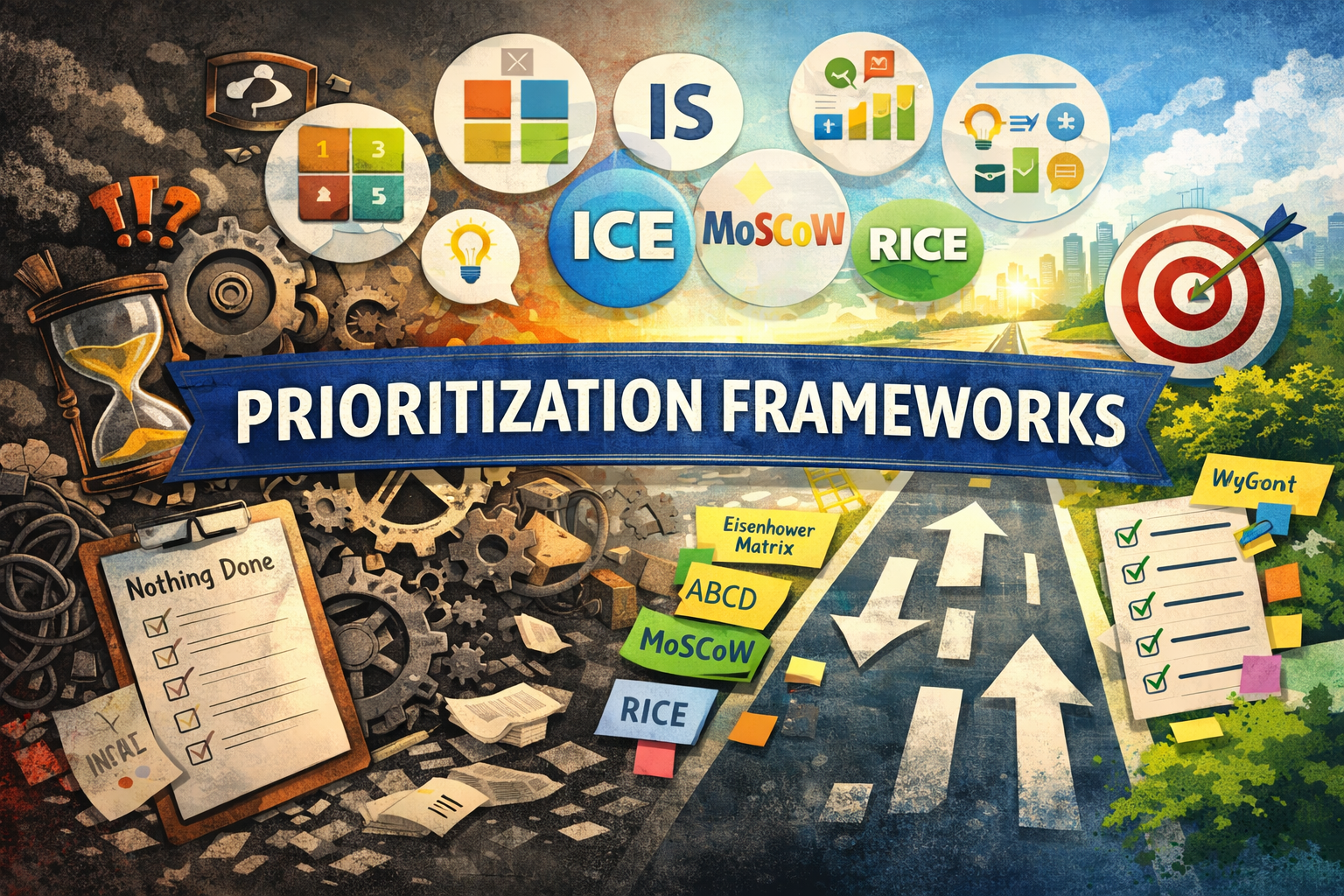
Stack Ranking with Strategic Themes: Prioritizing a Full Product Roadmap
Stack ranking is the practice of forcing a strict ordered list of initiatives from highest to lowest priority. Unlike bucket-based methods, stack ranking removes ambiguity because every item has a unique position. Combined with strategic themes, it becomes a robust roadmap governance mechanism. Strategic themes are top-level company priorities, such as: In a themed stack-ranking […]
Cost of Delay: A Strategic Lens for Product Prioritization Under Time Pressure
Cost of Delay (CoD) frames prioritization as an economics problem: what is the cost of waiting to deliver this item? This perspective is powerful when teams face many good ideas but limited capacity and meaningful time sensitivity. CoD can include multiple dimensions: Unlike effort-based planning alone, Cost of Delay captures urgency and market timing. An […]
Opportunity Scoring: Prioritizing Product Features by User Pain
Opportunity Scoring (popularized in Outcome-Driven Innovation contexts) helps teams prioritize based on unmet customer needs. Instead of starting with feature ideas, teams begin with desired outcomes and score each outcome by importance and current satisfaction. A common formula is: Opportunity Score = Importance + (Importance – Satisfaction) High-importance, low-satisfaction outcomes are the best opportunity zones […]
Impact vs Effort Matrix: A Fast Framework for Better Product Prioritization
The Impact vs Effort Matrix is one of the fastest ways to triage competing ideas when teams need directional prioritization quickly. It maps initiatives across two axes: expected impact and implementation effort. The matrix creates four practical quadrants: This framework is ideal during early discovery, backlog cleanup, or cross-team planning where not enough data exists […]
WSJF Explained: Prioritizing Product Work by Economic Impact
WSJF (Weighted Shortest Job First) is a prioritization method from Lean product and portfolio management that optimizes for economic throughput. Instead of ranking by loudest stakeholder or nearest deadline alone, WSJF compares cost of delay against job size. Formula: WSJF = Cost of Delay / Job Size Cost of Delay is usually estimated as a […]
Kano Model for Product Prioritization: Building Delight Without Ignoring Basics
The Kano Model helps product teams classify features based on how they influence customer satisfaction. Unlike linear frameworks, Kano recognizes that not all features create value in the same way. Some are expected basics, some drive proportional satisfaction, and some create delight disproportionate to effort. Kano categories commonly used in product planning are: Kano is […]

Meet TurboQuant: How Google’s Math-Magic Just Broke the AI Context Barrier
For years, the generative AI world has been fighting a quiet, expensive, and frustrating war. The enemy? Memory. Specifically, Key-Value (KV) cache memory. We love it when AIs like ChatGPT can remember what we said ten minutes ago. We love pasting an entire book into an LLM and asking questions. This is called the “context […]
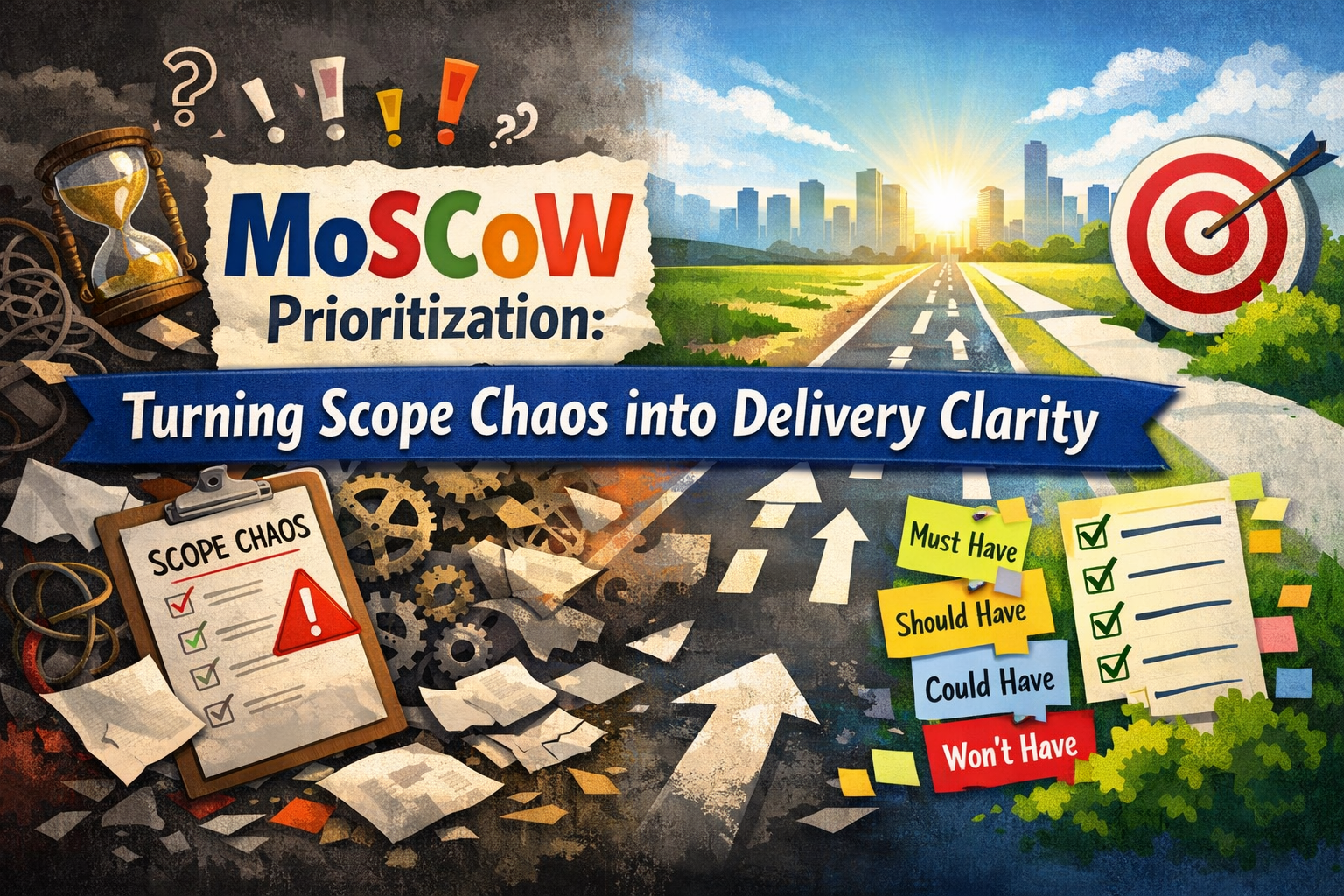
MoSCoW Prioritization: Turning Scope Chaos into Delivery Clarity
MoSCoW is a scope-prioritization framework that classifies work into Must have, Should have, Could have, and Won’t have (for now). It is especially effective when teams need to align execution under hard deadlines, such as launches, migrations, compliance windows, or contractual commitments. The value of MoSCoW is its simplicity. When every requirement is labeled “critical,” […]
RICE Prioritization in Practice: How Product Teams Decide What to Build Next
RICE is one of the most practical prioritization frameworks for product teams because it forces a decision across four dimensions that are normally argued separately: Reach, Impact, Confidence, and Effort. Most roadmap debates collapse into opinion because teams discuss user value, engineering complexity, and strategic urgency in different meetings. RICE works because it compresses those […]